



Residential pool regulations in Quebec are governed by the Règlement sur la sécurité des piscines résidentielles (Regulation respecting the safety of residential swimming pools), adopted in 2010 and amended in 2021. With the compliance deadline of September 30, 2027 approaching fast, it is essential for all pool owners to understand the current requirements and plan to bring their installation into compliance.
This comprehensive guide explains everything you need to know about Quebec pool standards, the deadlines to meet, and the steps to take to avoid fines.
Quebec Pool Standards: Current Regulatory Framework
The new standards for residential pools in Quebec were put in place to reduce the risk of drowning, particularly among young children. The 2026 pool legislation applies to all outdoor residential pools with a water depth that can reach or exceed 60 cm, including in-ground, above-ground, and even removable pools such as inflatable basins.
Extension of the Pool Compliance Deadline
In 2026, faced with confusion and concerns from pool owners, the Quebec government granted an additional two-year extension. Owners of pools installed before November 1, 2010 now have until September 30, 2027 to comply with the residential pool safety regulation. This extension offers welcome relief, but the countdown continues.
Who Do the New 2026 Pool Standards Apply To?
The regulations apply to all types of residential aquatic installations:
- Permanent in-ground pools
- Semi in-ground pools
- Above-ground pools with a depth of 60 cm or more
- Removable basins and inflatable pools of 60 cm or more
- Pools with an integrated spa
It is important to note that even temporary installations such as inflatable pools must comply with these safety standards if they reach the regulated depth.
Need a Compliant Fence for Your Residential Pool?
Discover our safe fencing solutions
Key Requirements of the 2026 Quebec Pool Regulation
The 2026 pool compliance standards set precise criteria to ensure safety around your pool. Understanding these requirements is the first step toward a compliant installation.
Minimum Height for Mandatory Pool Fencing
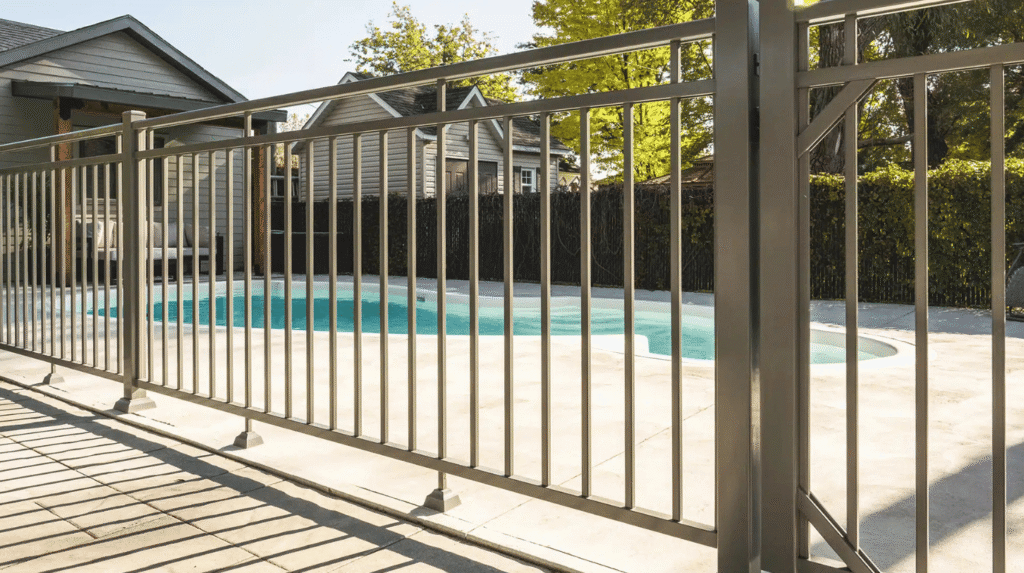
Any safety barrier surrounding a residential pool must have a minimum height of 1.2 metres (approximately 4 feet). This requirement is designed to prevent young children from easily accessing the pool without supervision. A fence that is too low will be deemed non-compliant during an inspection and will need to be raised or completely replaced.
Picket Spacing and Fence Openings
To prevent a child from squeezing through the pool barrier, openings must not allow the passage of a spherical object 10 cm in diameter. This rule applies to all fence types, whether aluminum, glass, or chain-link.
Chain-Link Fences: Specific Requirements
Chain-link enclosures installed or replaced since 2021 must meet additional standards. The mesh must measure a maximum of 3 cm (30 mm) in width or be fitted with slats to reduce the opening and prevent climbing. If you replace your pool with a new installation, your existing fence must also comply with this standard.
Gates and Safety Latches for Residential Pools
Locking systems are a critical component of the 2026 pool regulation. Every gate providing access to the swimming area must be equipped with an automatic closing and locking device. The safety latch must be located on the inside of the enclosure (pool side) or, if installed on the outside, at a minimum height of 1.5 metres to keep it out of children’s reach.
Mandatory Automatic Closing Mechanisms
A gate that does not close automatically represents a major hazard. The standards require the installation of devices that ensure the gate closes and locks immediately after each passage. Without this system, your installation will be deemed non-compliant.
Safety Clearance for Pool Equipment
When installing a new barrier or bringing your pool up to standard, you must ensure that no equipment related to the pool’s operation facilitates climbing. Water heaters, pumps, filters, or other equipment located outside the enclosure must be placed more than one metre from the fence if they could be used as a foothold for climbing.
Railings and Fences Compliant with 2026 Standards
Compliance Deadlines for the 2026 Residential Pool Regulation
Understanding the deadlines is essential to avoid penalties and plan your compliance work.
September 30, 2027 Deadline: Who Is Affected?
If your pool was installed before November 1, 2010, you have until September 30, 2027 to comply with the residential pool safety regulation. This two-year extension, announced in 2026, gives homeowners more time to carry out the necessary work.
Pools Installed After 2010: Immediate Compliance Required
For all installations made after November 1, 2010, compliance with the standards has been mandatory since the time of installation. If you installed your pool after that date, make sure your installation already meets all safety requirements.
Exemptions and Special Cases Under Pool Standards
Above-ground pools whose walls are at least 1.2 metres high do not require a full enclosure around the basin. However, you must secure access points such as the ladder, stairs, or access from an adjacent deck or patio.
Professional Installation of Compliant Railings and Barriers
Fines and Penalties for Pool Non-Compliance in Quebec
Failure to comply with the 2026 pool regulation can result in significant financial consequences.
Fine Amounts for Standard Violations
Homeowners who do not comply with the standards face fines that can be repeated as long as non-compliance persists. The regulation provides for:
- $500 to $700 for an individual
- $700 to $1,000 for a legal entity
- Doubled fines for repeat offences
Note: Fines do not accumulate automatically on a daily basis, but can be imposed repeatedly as long as the installation remains non-compliant.
Inspection and Verification Process
Municipal inspectors are authorized to verify the compliance of your installation. After completing the upgrade work, an inspection confirms that your pool meets all regulatory requirements. It is therefore crucial to carry out compliant work the first time to avoid additional costs.
2026 Residential Pool Compliance Guide
Here are the steps to follow to ensure your installation complies with current legislation.
Self-Assessment of Your Current Installation
The Quebec government provides free self-assessment forms for different types of pools. These tools allow you to check whether your installation meets the standards without waiting for the official inspection. You can download forms tailored to in-ground, semi in-ground, above-ground, or removable pools.
Obtaining the Necessary Permits from Your Municipality
Before undertaking compliance work, contact your municipality. Depending on the nature of the modifications, you may need a permit or certificate of authorization. Each municipality may also impose stricter regulations than the provincial standards.
Municipality-Specific Regulations for Pools
Some Quebec cities have established additional requirements for residential pools. It is essential to consult your municipality’s urban planning department to learn about the local rules applicable to your area.
Carrying Out Pool Upgrade Work
Once permits are obtained, proceed with the required modifications. Whether you need to install a new fence, raise an existing barrier, add an automatic locking system, or relocate equipment, make sure the work strictly meets the standards.
Final Compliance Inspection
After the work is completed, a municipal inspector verifies that your installation is compliant. This final step is mandatory and ensures you are not at risk of fines for non-compliance.
Types of Fences Compliant with the 2026 Pool Regulation
The type of barrier you choose affects not only the aesthetics of your outdoor space, but also the cost and maintenance required.
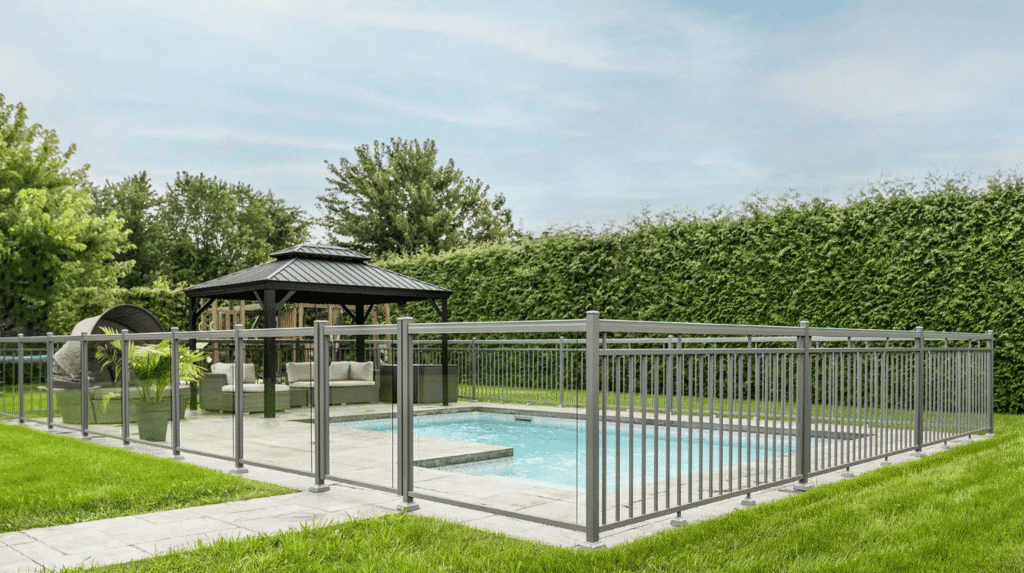
Aluminum Fences for Residential Pools
Aluminum railings offer exceptional durability with minimal maintenance. Resistant to rust and harsh weather, they are an excellent choice for Quebec’s climate. Aluminum is available in several styles and colours to complement your landscaping.
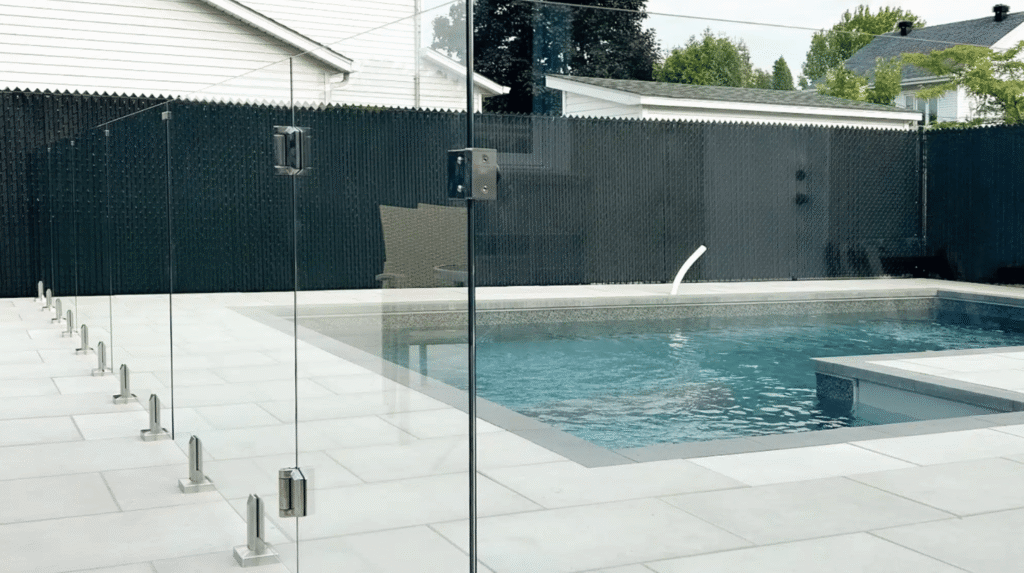
Glass Fences for Outdoor Pools
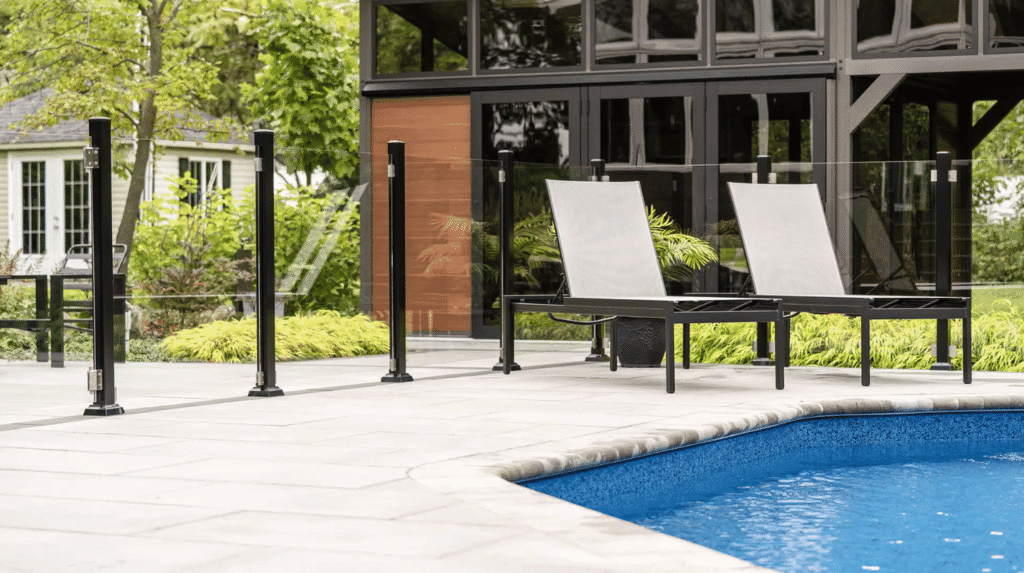
Tempered glass barriers offer maximum visibility while meeting safety standards. Although they require regular cleaning and represent a larger investment, they add a modern and elegant touch to your pool area.
PVC and Chain-Link Fences
PVC enclosures are economical and easy to install, although they are generally less robust than aluminum. Chain-link fences, while affordable, must meet the strict mesh size requirements and may require the addition of slats to be compliant.
Aesthetic and Safe Fencing Solutions
Common Mistakes to Avoid with Pool Standards
Certain misunderstandings of the regulation can be costly for homeowners.
Thinking a Hedge Can Replace a Compliant Fence
A row of shrubs or a hedge, even a dense one, does not constitute an acceptable barrier under the standards. Only a solid structure with the regulatory specifications can adequately protect your pool.
Neglecting the Minimum Regulatory Height
An error of just a few centimetres can make your enclosure non-compliant. Make sure your fence truly reaches 1.2 metres along its entire length, including at junction points and gates.
Forgetting the Automatic Locking System
Even a perfectly compliant fence becomes useless if the gate can remain open. Installing an automatic closing and locking device is not optional — it is a fundamental requirement of the 2026 pool regulation.
Postponing Compliance Until the Last Minute
With the September 30, 2027 deadline approaching, specialized contractors are likely to be overwhelmed with requests. Planning your work now ensures better timelines and saves you the stress of last-minute work.
Resources and Assistance for Quebec Pool Compliance
Several resources are available to help you through the compliance process.
Residential Pool Regulation Application Guide
The Quebec Ministry of Municipal Affairs and Housing offers a detailed guide (PDF) explaining all regulatory requirements. This document is a valuable reference for understanding and correctly interpreting the technical standards.
Self-Assessment Forms by Pool Type
Specific forms are available for each type of installation:
- In-ground pools (PDF)
- Semi in-ground pools (PDF)
- Above-ground pools with walls of 1.2 m or more (PDF)
- Removable pools with walls of 1.4 m or more (PDF)
- Above-ground pools with walls less than 1.2 m (PDF)
- Removable pools with walls less than 1.4 m (PDF)
These free tools allow you to assess the compliance of your installation yourself before the official inspection.
Contact Your Municipality for Specific Questions
Do not hesitate to contact your municipality’s urban planning department or permit office for answers to your questions. Municipal officials can guide you through the process and inform you of applicable local regulations.
Costs of Pool Regulation Compliance
The investment required varies depending on the current state of your installation and the work needed.
Budget for a New Compliant Pool Fence
The cost of a complete fence depends on the material chosen, the perimeter to be protected, and the complexity of the installation. A PVC barrier can cost between $30 and $50 per linear foot, while an aluminum enclosure ranges from $50 to $100 per linear foot. Glass fences are the most expensive option, starting at $100 per linear foot.
Costs of Adding Locking Devices
If your existing fence is compliant but lacks an automatic closing system, adding this device generally costs between $150 and $400 depending on the type of mechanism and the complexity of the installation. For tempered glass fences, expect a higher investment due to the specialized hardware required.
Permit and Municipal Inspection Fees
Permit fees vary from one municipality to another, but plan for $50 to $200 for a construction or modification permit. The final inspection is often included in these fees, but some cities may charge additional fees.
Get an Estimate for Your Compliance Work
FAQ: Questions About the 2026 Quebec Pool Regulation
What Regulation Governs Residential Pools in Quebec?
Quebec pool law imposes strict safety standards for all residential pools with a depth of 60 cm or more. Requirements include a fence at least 1.2 m high, openings no larger than 10 cm, and an automatic locking system on all access gates.
What Is the New Law on Above-Ground Pools in Quebec Starting in 2025?
For above-ground pools, the regulation applies if the depth reaches 60 cm. Pools whose walls measure at least 1.2 m in height do not need a full fence, but access points (ladders, stairs) must be secured. Owners of pools installed before November 2010 have until September 30, 2027 to comply.
What Is the Pool Safety Bill?
The Règlement sur la sécurité des piscines résidentielles (Regulation respecting the safety of residential swimming pools), adopted in 2010 and amended in 2021, aims to reduce drownings by imposing strict safety standards. Following concerns from homeowners, the government extended the compliance deadline by two years for installations predating 2010, moving it to September 30, 2027.
What Are the Pool Regulations in Quebec City?
In addition to provincial standards, Quebec City may impose additional requirements through its municipal bylaws. It is imperative to consult your municipality’s urban planning department to learn about the specific rules for your area, as they may be stricter than provincial standards.
Are Inflatable Pools Covered by the 2026 Regulation?
Yes, all removable and inflatable pools with a water depth that can reach 60 cm or more must comply with the safety standards. Even though they are temporary, these basins present the same drowning risks and require a compliant safety enclosure.
Can I Install My Pool Fence Myself?
Technically, you can install your own fence as long as you comply with all regulatory standards. However, given the complexity of the requirements and the importance of a compliant installation, hiring certified professionals ensures that your work will meet the standards and pass the municipal inspection.
What Happens If I Don’t Comply Before September 30, 2027?
Failure to meet the deadline exposes homeowners to fines that can be repeated as long as non-compliance persists. The regulation provides for:
- $500 to $700 for an individual
- $700 to $1,000 for a legal entity
- Doubled fines for repeat offences
These fines do not accumulate automatically on a daily basis, but can be imposed repeatedly as long as the installation remains non-compliant. Furthermore, in the event of an accident, the absence of safety measures could have implications for your home insurance and legal liability.
My Pool Was Installed in 2009. Am I Affected by the 2027 Deadline?
Yes, if your pool was installed before November 1, 2010, you benefit from the extended deadline until September 30, 2027. However, it is strongly recommended not to wait until the last minute to carry out the compliance work.
Conclusion: Plan Ahead for 2026 Pool Regulation Compliance
The 2026 pool regulation represents a mandatory investment in the safety of your family and loved ones. Although the September 30, 2027 deadline may seem distant, planning your work now allows you to avoid stress, get better prices, and guarantee the availability of qualified contractors.
Whether you need to install a new fence, raise an existing barrier, or add safety devices, Vaudry Villeneuve has the expertise to guide you through your compliance project. Our fencing solutions and certified railings meet all current standards while blending seamlessly with your outdoor landscaping.
Don’t wait until the last minute to secure your pool. Contact us today for a free assessment of your installation and a compliance plan tailored to your needs and budget.